Email: ccris_conf@163.com

Email: ccris_conf@163.com

Distinguished Prof. Wanyang Dai
President & CEO: SIR Fourm (Industrial 6.0 Forum)
Nanjing University, China
Biography: Wanyang Dai is a Distinguished Professor in Mathematics School of Nanjing University, Chief Scientist at Su Xia Control Technology, President and CEO of U.S. based (blochchain and quantum computing) SIR Forum (Industial 6.0 Forum), a Special Guest Expert in Jiangsu FinTech Research Center, Chairman of Jiangsu Big Data-Blockchain and Smart Information Special Committee, where his research includes stochastic processes related big model and quantum computing, artificial intelligence and machine learning, optimization and optimal control, admission/scheduling/routing protocols and performance analysis/optimization for various projects in BigData-Blockchain oriented quantum-cloud computing and the next generation of wireless and wireline communication systems, forward/backward stochastic (ordinary/partial) differential equations and their applications to queueing systems, stochastic differential games, communication networks, Internet of Things, financial engineering, energy and power engineering, etc. His “influential” achievements are published in “big name” journals including Journal of Applied Statistics, Probability in the Engineering and Informational Sciences, Quantum Information Processing, Operational Research, Operations Research, Computers & Mathematics with Applications, Communications in Mathematical Sciences, Journal of Computational and Applied Mathematics, Queueing Systems, Mathematical and Computer Modeling of Dynamical Systems, etc. His researches are awarded as outstanding papers by various academic societies, e.g., IEEE Top Conference Series, etc.. He has one Invention Patent approved by China National Intellectual Property Administration in 2024 and one Technology Transfer approved by (U.S.A.) Bell Labs (Now called Nokia Bell Labs) during 1998-1999. He received his Ph.D degree in applied mathematics jointly with industrial engineering and systems engineering from Georgia Institute of Technology, Atlanta, GA, U.S.A., in 1996, where he worked on stochastics and applied probability concerning network performance modeling and analysis, algorithm design and implementation via stochastic diffusion approximation. The breakthrough results and methodologies developed in his thesis were cited, used, and claimed as “contemporaneous and independent” achievements by some other subsequent breakthrough papers that were presented as “45 minute invited talk in probability and statistics” in International Congress of Mathematicians (ICM) 1998, which is the most privilege honor in the mathematical society. The designed finite element-Galerkin algorithm to compute the stationary distributions of reflecting Brownian motions (weak solutions of general dimensional partial differential equations) is also well-known to the related fields.
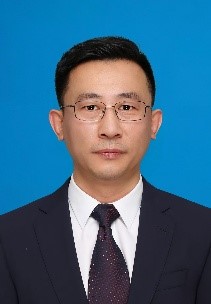
Prof. Kuo Liu
Dalian University of Technology, China
Biography:
Kuo Liu is a professor in the School of Mechanical Engineering at Dalian University of Technology and serves as deputy director of the Intelligent Manufacturing Longcheng Laboratory. He has been selected for the National Youth Talent Plan and Leading Talent of Dalian. His main research interests include online monitoring and intelligent control, accuracy retention and stability of machine tools. He has published over 100 peer-reviewed papers and more than 100 granted patents. His major honors include a Gold Medal at the International Exhibition of Inventions Geneva, the First Prize of the China Machinery Industry Science and Technology Award (2nd of 15), and the First Prize of the Liaoning Provincial Science and Technology Award (1st of 8).
Speech Title: Intelligent Monitoring and Control of Machine Tools
Abstract: Machine tools are the foundation of advanced manufacturing. As artificial intelligence becomes more deeply integrated with advanced manufacturing, high-end machine tools are rapidly becoming smarter. These intelligent capabilities enable machines to sense changing conditions and make decisions on their own, offering new ways to improve machining accuracy and efficiency. However, intelligent models often require repeated manual adjustment during deployment and operation, making it difficult to apply these technologies on a large scale. To address this challenge, this keynote will focus on intelligent monitoring and control of machine tools. It will introduce methods for self-evolving models and present results from their practical applications. Through online learning and parameter identification, the models can update their internal parameters as conditions change, improving their ability to adapt during deployment and operation. These methods support the large-scale industrial use of technologies such as machine health monitoring, adaptive control of feed rate, and real-time thermal error compensation, providing key technical support for better machine-tool performance and more autonomous operation.

Assoc. Prof. Lei Chen
Shandong University , China
Biography: Lei Chen received the B.Sc. and M.Sc. degrees in electrical engineering from Shandong University, Jinan, China, and the Ph.D. degree in electrical and computer engineering from University of Ottawa, Ontario, Canada. He is currently an Associate Professor with the School of Information Science and Engineering, Shandong University, China. His research interests include image processing and computer vision, visual quality assessment and pattern recognition, machine learning and artificial intelligence. He was the principal investigator of projects granted from the National Natural Science Foundation of China, National Natural Science Foundation of Shandong Province, China Postdoctoral Science Foundation, etc. He has published more than 50 papers on top international journals and conferences in recent years including IEEE TIP, Signal Process., ICME, etc. He was awarded the Future Plan for Young Scholars of Shandong University. He served for many international conferences including the ICIGP 2021, CSAI2022, MLCCIM2022, and ICIVC 2023 as Program Chair, Technical Chair or Publicity Chair
